Fan art — not a real film. No picture titled High Couch of Silistra was ever made. Full notice

Imagined campaign

Press

Copy written as if a $15 million Universal picture had opened in June 1980 — plus a 2026 restoration rumor. Entirely invented.

Fan art — not Rotten Tomatoes

Faux Tomatometer

This is not a Rotten Tomatoes page. RT has no such title. The 61% / 38 and 74% audience numbers are fan fiction, as are the three notices below.

Tap to enlarge · Fan art only · No such title exists

Muti holds the screen even when the myth gets lost in the sand — a lavish, uneven, unapologetically adult space fantasy that wants to be both temple and grindhouse.

Critic notices (invented)

Three full notices — one rave, one shrug, one pan — as if the trades had to file copy on a Friday in June 1980. Critics and papers are fictitious.

Fresh · 3.5 / 4

A throne walking away from itself

Annalise Voss · Pacific Film Review · 13 June 1980

John Badham, still warm from Dracula, has done something unfashionable: he has taken a cult paperback about power, fertility, and exile and shot it as if the desert itself were a character. High Couch of Silistra is sensual without being stupid, mythic without apology, and — this is the surprise — interested in whether its heroine thinks.

Ornella Muti’s Estri is not a poster draped over a plot. She listens. She calculates. When the holographic chaldra arrives, you see the High Couch leave her face before she leaves the Well. Arnold Schwarzenegger, as the Slayer Sereth, is used the way a good Western uses a mountain: limited dialogue, enormous mass, a physical argument the picture keeps winning. Sean Connery’s Estrazi, arriving late and bronze, is the oldest trick in spectacle — the god who might be a father — and it still works because Connery refuses to wink.

The Wells are built, not drawn. Matte paintings carry the off-world sequences with the slightly unreal glow of 2001 by way of a Spanish quarry. Giorgio Moroder’s electronics braid Basil Poledouris’s low strings until the score feels like a ritual you are not supposed to have heard.

It is too long in the middle, and the chaldra lectures will try the patience of anyone who came only for the chain. Never mind. Muti holds the frame. The last shot — Estri on the steps, circlet restored, eyes not — is the reason they still invent religions in the dark.
Mixed · 2.5 / 4

Gorgeous furniture, unfinished myth

Gregory Pymm · Midtown Weekly · 16 June 1980

Universal has spent fifteen million dollars proving that a woman can wear copper jewelry in the desert and that Arnold Schwarzenegger can stand still while the wind does the acting. High Couch of Silistra is never ugly. It is only intermittently a movie.

Badham wants a temple and a grindhouse in the same reel. For twenty minutes at a time he gets both: the Well of Astria is a triumph of practical sets, Muti is magnetic, and the holographic mother is the best cheap trick since the monolith. Then the picture stops to explain a caste system. Then it remembers it is an adventure. Then Connery appears, bronze and brief, like a guest star who read a better script.

The second act is homework. Estri and Sereth cross sand that has already been crossed. A wristwatch flashes on an extra in the Arlet market — the universe is old, the extras are not. When the bronze gate finally yawns, you are grateful and slightly bored, which is a terrible combination for revelation.

See it for the production design and for Muti, who insists on intelligence even when the dialogue does not. Skip the middle. Stay for Connery. Tell your friends it was better than it is. That is how cults start.

Rotten · 1 / 4

Soft-core with matte paintings

Roland Pike · The Harbor Gazette · 14 June 1980

There is a film hiding in High Couch of Silistra. Unfortunately it is hiding under a great deal of oil, chain, and studio nerve. What arrives in theaters this week is an R-rated souvenir of a paperback cover: Muti arranged like a Vallejo, Schwarzenegger arranged like a statue, Connery arranged like a paycheck.

Badham directed Saturday Night Fever and Dracula. He knows how to move a camera through a room that costs money. He does not, here, know why anyone is speaking. The chaldra is a plot coupon. The Wells are harems with better plaster. Every time the picture threatens to become about power it becomes about costume. Every time Estri threatens to become a person she is asked to pose.

I will concede the mattes. The bronze hall is handsome. Moroder beeps on schedule. None of that substitutes for a third act that is not a light show with a Scottish accent. The MPAA took a scissors to the Well sequences to avoid an X; they should have taken them to the script.

Teenagers will find it. Collectors will keep the poster. Serious people may remember that 1980 also gave us The Empire Strikes Back, and that spectacle is not the same thing as awe. Rated R. For what, precisely, besides the advertising.

Invented restoration rumor · August 2026

The Silistra Cut

#releasetheSilistraCut

A 35mm workprint labeled HCOS / DIR CUT / 18 JUN 80 has — according to this archive’s fan fiction — surfaced from a Valencia storage vault. Runtime stamped on the leader: 128 minutes. Theatrical: 118.

  • The extra ten minutes are said to restore Estri’s uncut arrival in Estrazi’s hall, a longer chaldra recitation, and a desert sequence the MPAA asked Badham to trim for an R.
  • Universal (in this invented history) declined a 4K restoration. Fan petitions recycled the old slogan: #releasetheSilistraCut.
  • A bootleg telecine circulating on collector boards is grainy, pink-shifted, and almost certainly a hoax — because the picture was never shot. Treat every frame as tribute.

Watch the fan “fragment”

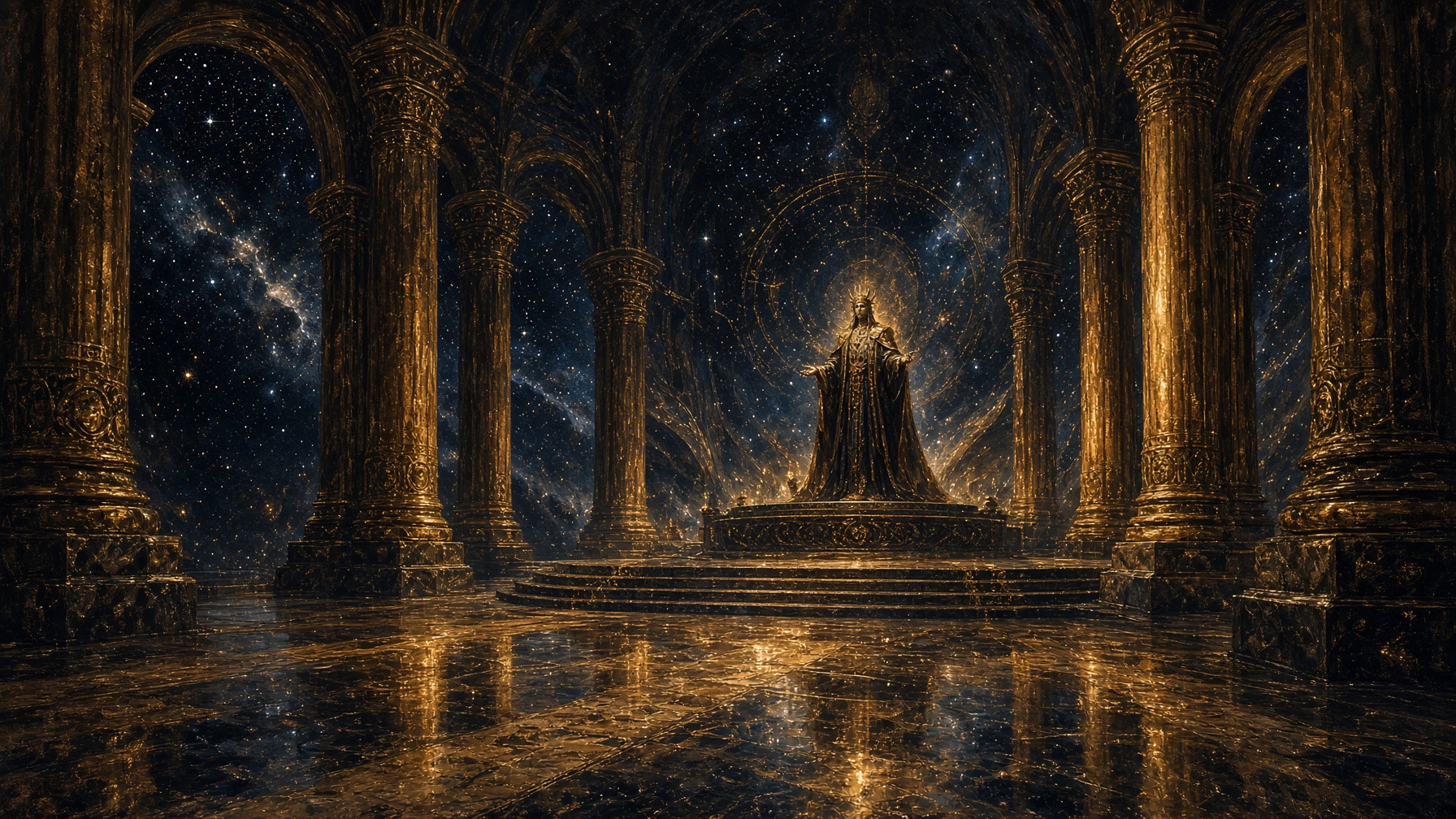
Bronze hall of starlight

Taglines

  • She ruled the greatest house of pleasure in the stars… until destiny called her beyond.
  • “Aristocrat. Outcast. Seeker. Ruler.”
  • “From the novel that shocked and fascinated millions.”

Pull quotes

Badham’s desert spectacle has the nerve to treat a cult paperback as if it were Lawrence of Arabia with a chaldra.

Variety, imagined 6 June 1980

I went for the poster. I stayed because Estri is not a damsel. She is the throne walking away from itself.

Fan letter, 1980 (invented)

The third act’s bronze hall is the most expensive matte in the picture — and the one that makes you forget there is no such world.

Cinefantastique, imagined July 1980

Radio :30 (script)

Wind. A low chain. Then: “From the novel that dared to explore the ultimate power… Ornella Muti is Estri — High Couch of Silistra. She ruled the greatest house of pleasure in the universe… until a message from the dead sent her beyond the stars. Rated R. Now playing.”